10 hr
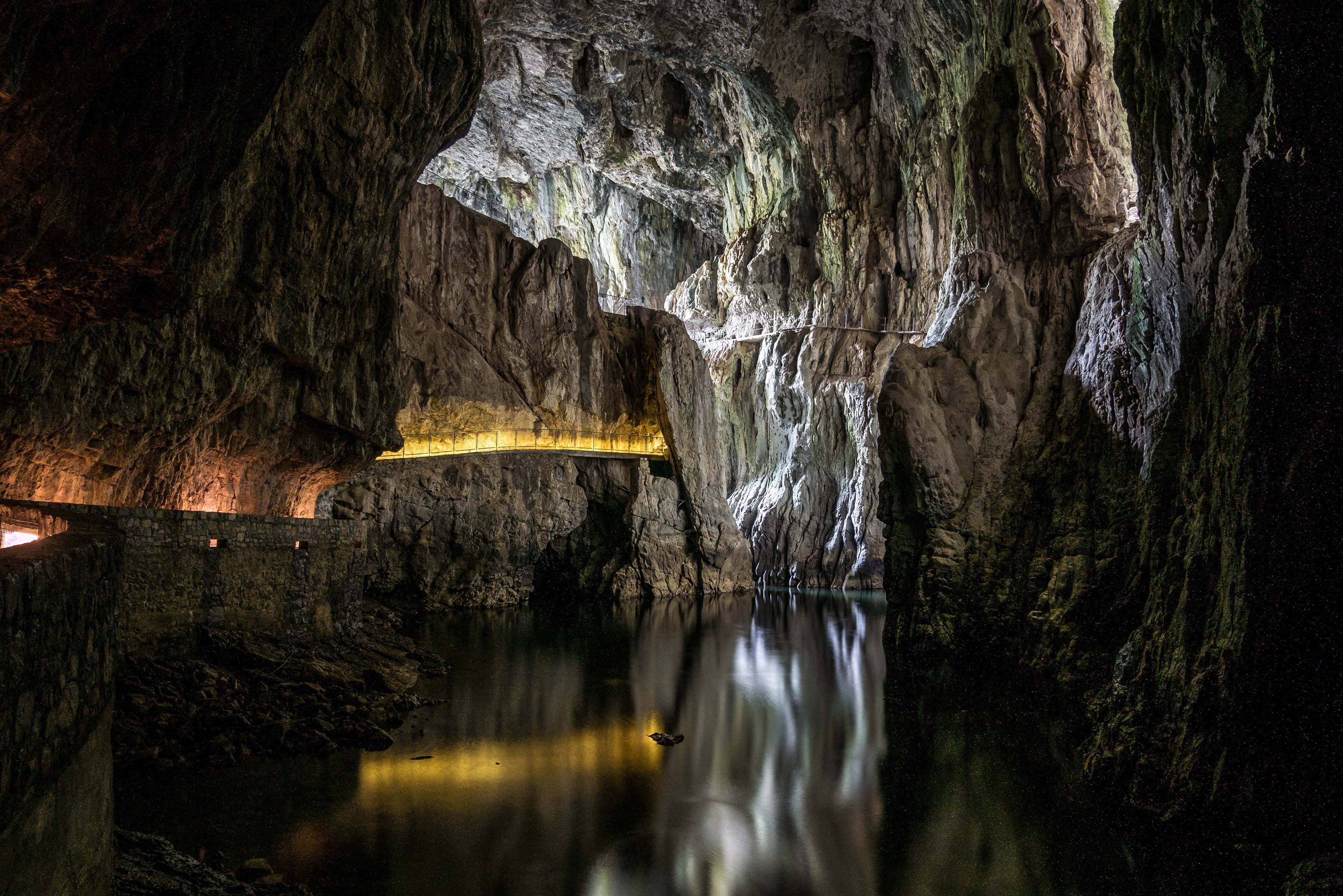
Postojna Cave, Predjama Castle & Piran Day Trip from Ljubljana
- Expert local guide
- Small group
- Skip-the-line access
- Free cancellation
Piran Day Tour From Ljubljana — Adriatic Coast & Venetian Architecture
Venetian bell towers above the Adriatic, salt pans at Sečovlje
Compare fares, pick the fit — all bookings are mobile-voucher and eligible for free cancellation where shown.
10 hr
9 hr 30 min
Selecting the right piran day tour from.ljubljana involves balancing your interest in historic landmarks with the flexibility of independent exploration. This overview helps you choose between individual site visits and curated access passes to experience the best of the Slovenian Coast.
| Individual Site Access Single attraction entry |
Top pick Discover Culture Pass Multi-site cultural bundle |
|
|---|---|---|
| Entry Level | Single attraction | Multiple attractions |
| Access Method | On-site ticket office | Pre-booked or on-site |
| What's Included | Walls OR Museum OR Bell Tower | Walls AND Bell Tower AND Mediadom |
| Best for | Focused, budget-conscious travelers | First-timers seeking comprehensive history |
| See tickets & prices |
Verdict: For a complete piran day tour from.ljubljana, the multi-site pass is recommended for visitors aiming to see the city walls, bell tower, and multimedia history in one day.
Worth it for first-timers seeking coastal variety
A Piran day tour from Ljubljana delivers solid value when packaged with karst attractions—most tours bundle Postojna or Škocjan caves with Predjama Castle before reaching the Adriatic coast. You'll cover 250+ kilometers round-trip, typically spending 2–3 hours exploring Piran's Venetian-era old town, Tartini Square, and harbor views from St. George's Cathedral. The coastal stop justifies itself if you value efficient access to Slovenia's maritime heritage without renting a car or navigating coastal parking (notoriously tight May–September). Solo travelers and cruise-averse visitors gain the most—guided context transforms narrow alleyways and salt-pan history into narrative rather than photo ops. Skip it if you prefer slow-paced seaside dining or plan a dedicated Istrian coast itinerary; day tours allocate roughly 90 minutes of free time in Piran itself, limiting culinary exploration beyond a quick seafood bite.
Bottom line: Book a Piran day tour from Ljubljana if you're prioritizing geographic range over deep immersion—it's the practical choice for first-time visitors cramming Slovenia's highlights into a tight schedule.
They complement each other; most visitors who do both call the combined Postojna Cave and Predjama Castle trip the more thrilling subterranean adventure, while a piran day tour from.ljubljana offers a more relaxing seaside escape. Both are top-rated Slovenia landmarks, but they cater to very different travel interests.
|
Top pick Piran Day Tour |
Postojna & Predjama | |
|---|---|---|
| Experience type | Seaside town and cultural walk | |
| Typical duration | 6–10 hours | |
| Primary activity | Strolling Venetian streets and swimming | |
| Best for | Architecture and Adriatic sea views | |
| Transportation | Bus or private guided car | |
| Price range | From 88 EUR (varies) | |
| See tickets & prices |
Verdict: If you seek a piran day tour from.ljubljana tickets to explore coastal charm, choose the coast; if you prefer dramatic history and nature, select the cave and castle route.
Hand-picked experiences loved by thousands of travelers
6 hours
Free Cancellation
Experience the Adriatic charm of Piran on this afternoon excursion from Ljubljana with guided exploration
10.5 hours
Free Cancellation
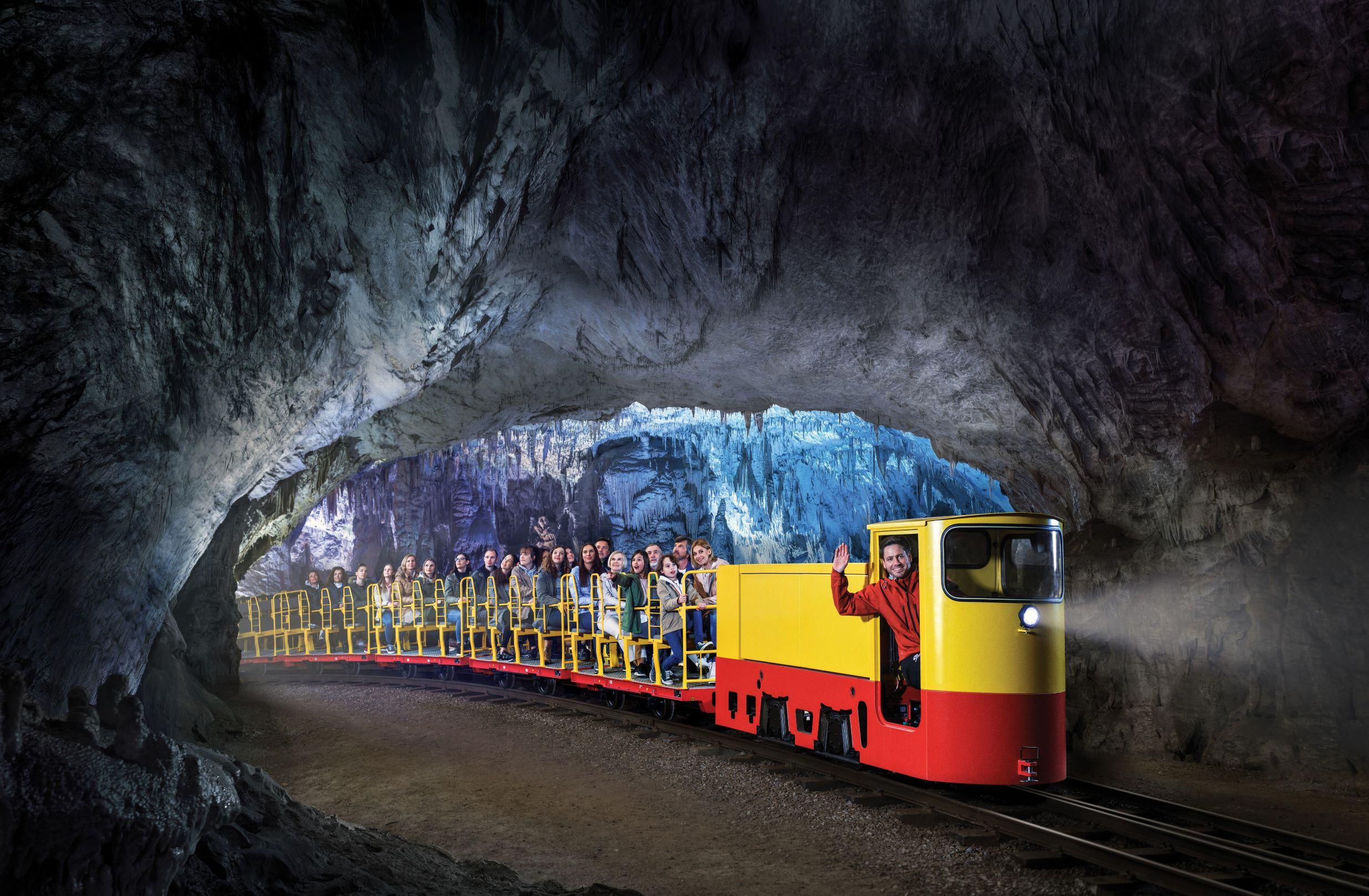
Journey through UNESCO caves, a cliffside fortress, and the enchanting Adriatic town of Piran
10 hours
Free Cancellation
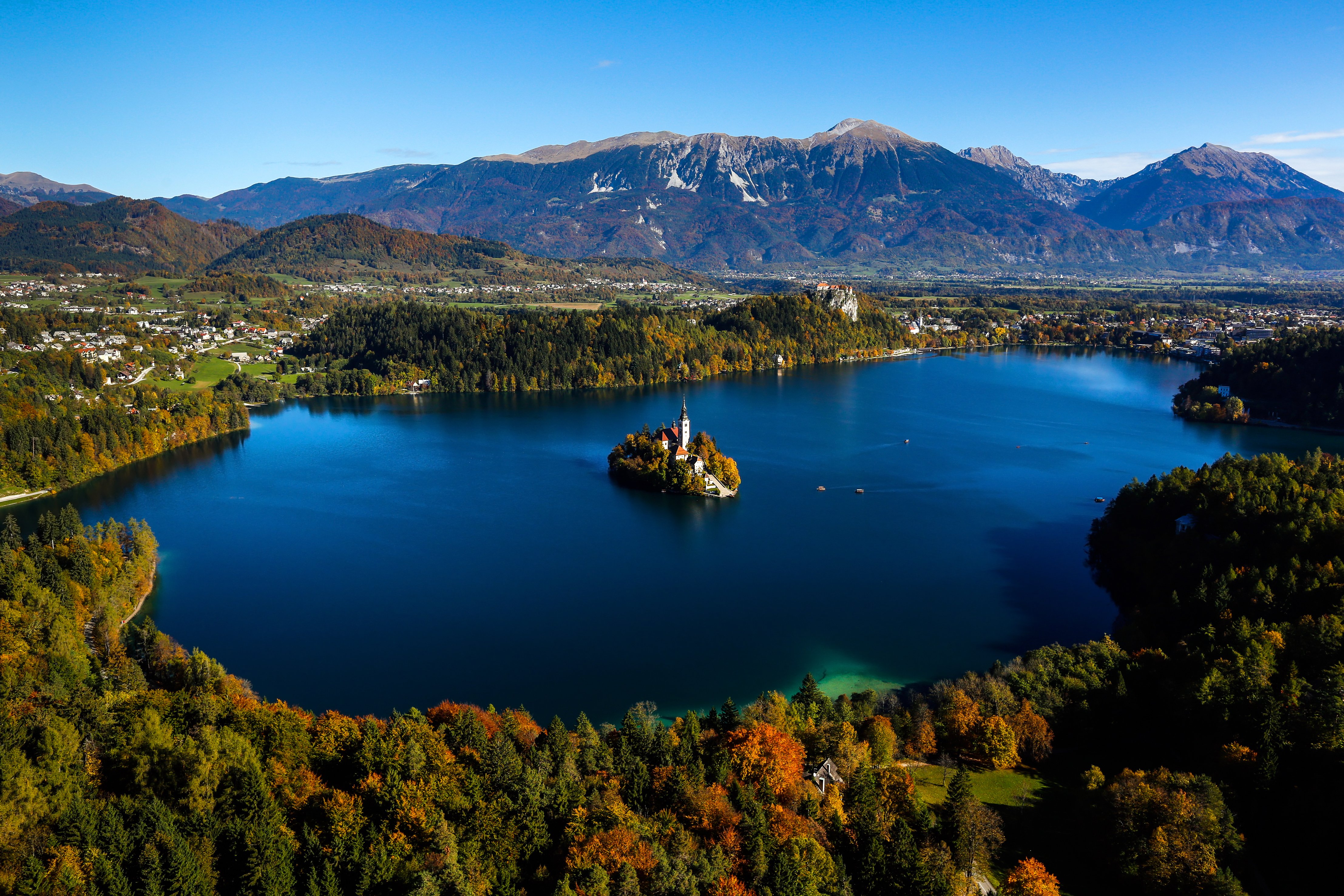
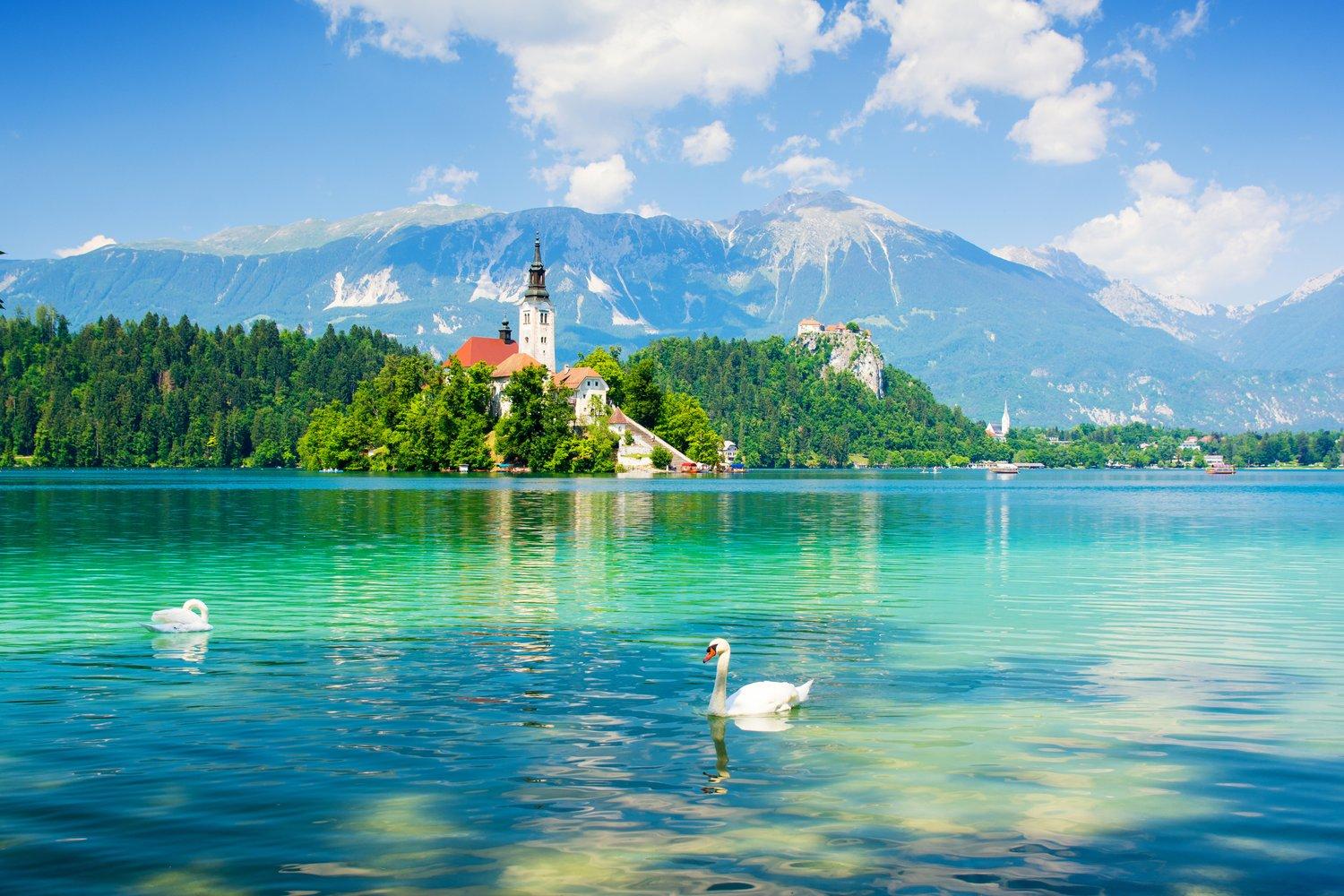
Journey through Slovenia's top three wonders: an underground cave system, a clifftop fortress, and an alpine lake with its island church
6 hours
Free Cancellation
Journey through Slovenia's underground marvels and medieval fortress on a guided excursion from the capital
6 hours
Free Cancellation
Escape to Slovenia's alpine paradise with castle views, island church visits, and lakeside serenity
You leave Ljubljana at eight in the morning, the highway descending through forested karst before the Adriatic opens ahead, a flat blue line between low hills.
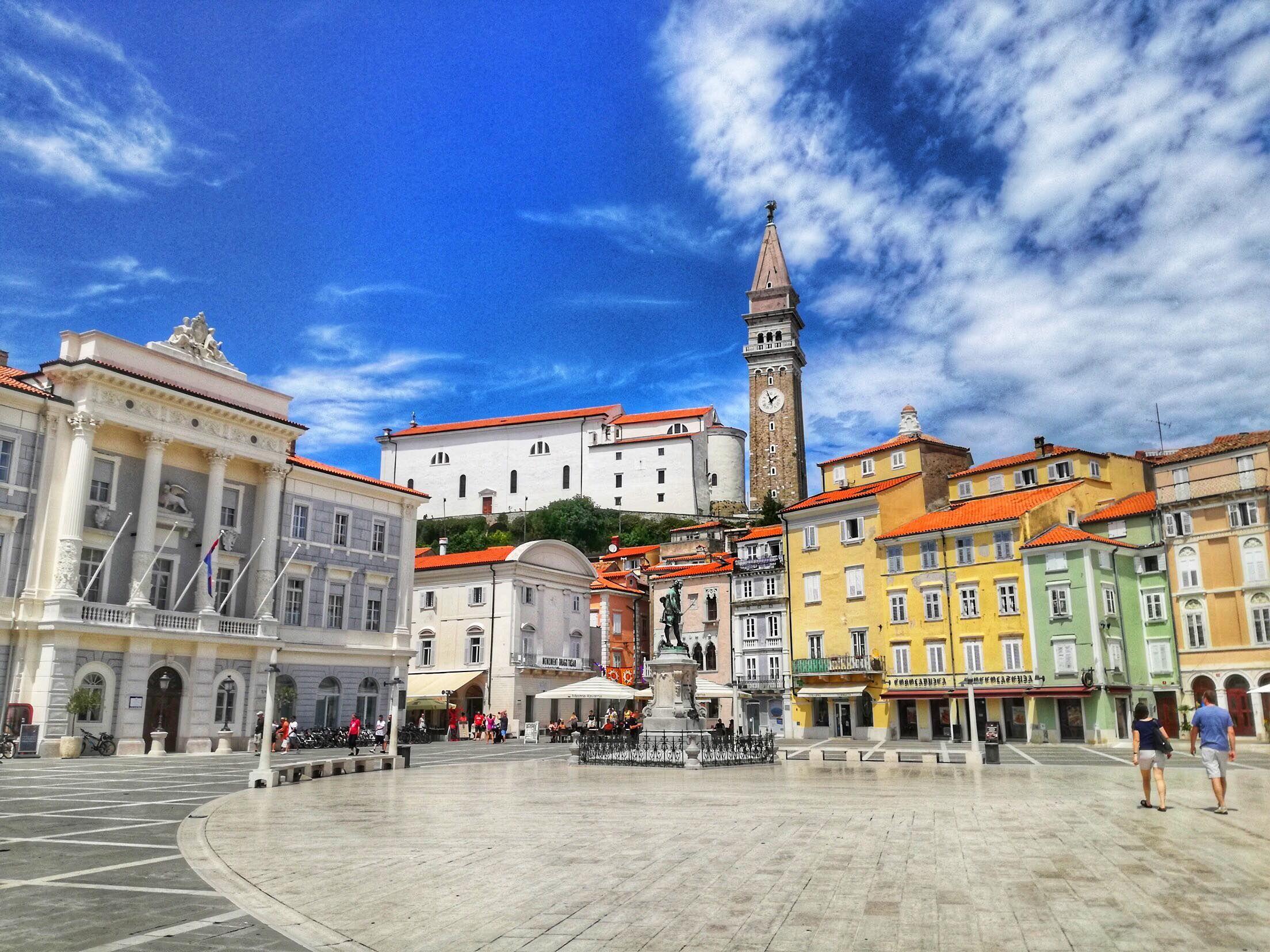
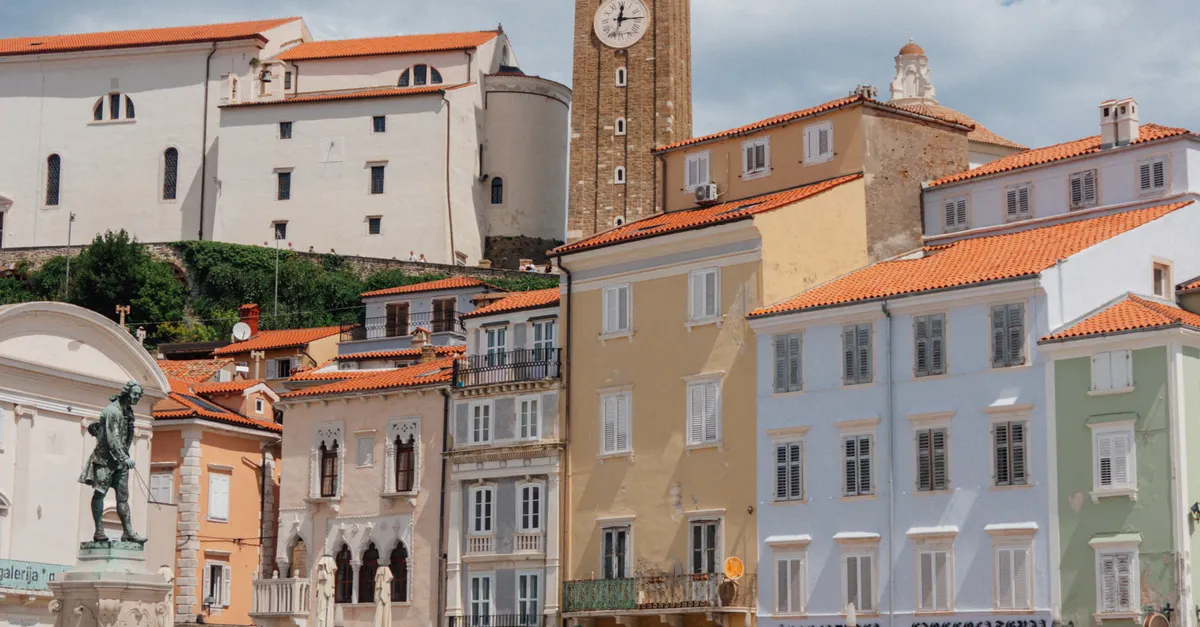
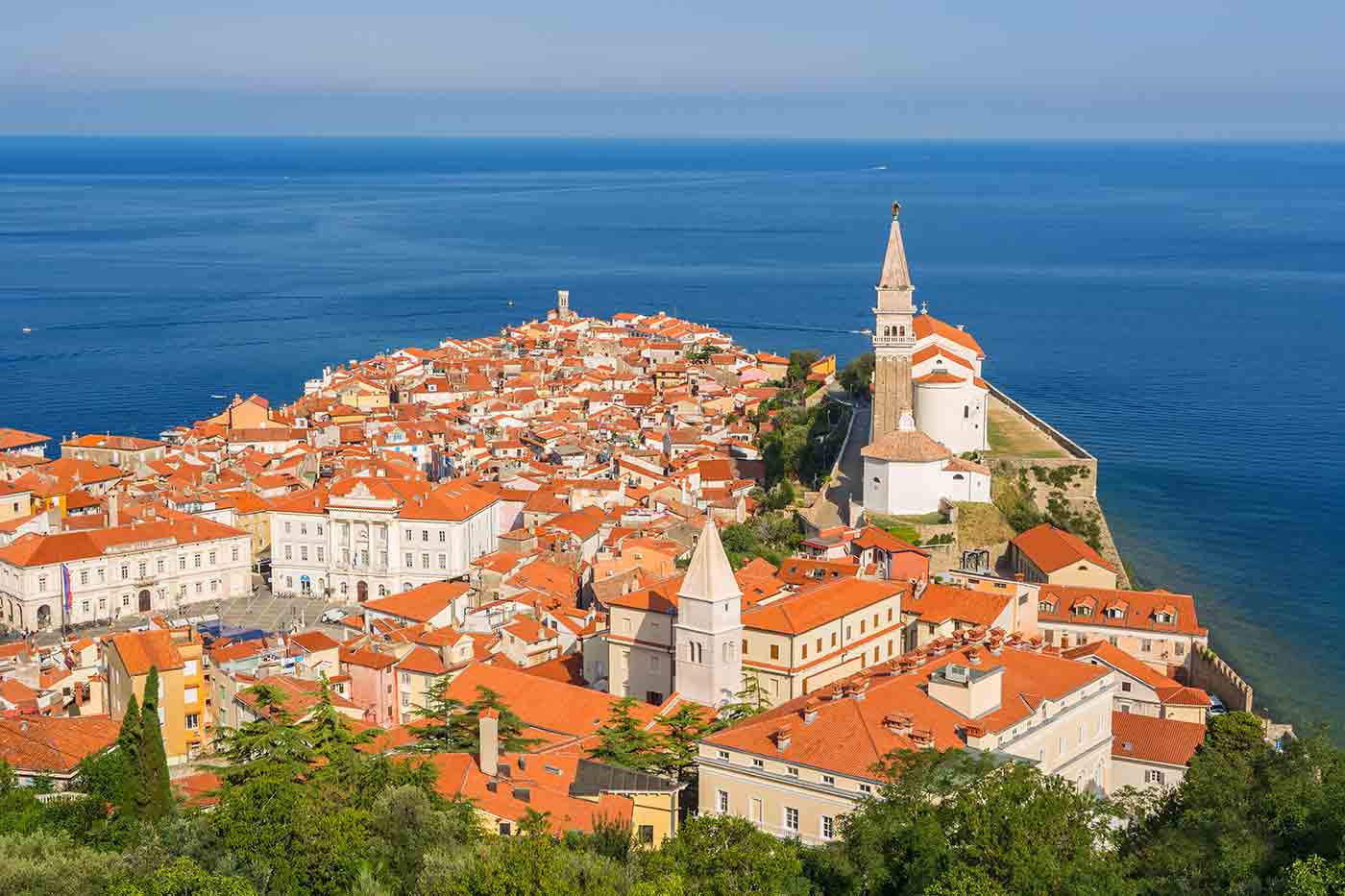
At Piran, your coach parks above the old town; you walk down stone steps into Tartini Square, where the oval basin was once a harbor and fishing boats moored against the marble pavement. The Benečanka house stands to your left, its Gothic balcony striped in red and white, and the campanile rises ahead — 150 steps spiral to the belfry, where the bay spreads in three directions and the Italian coast haze on the horizon.
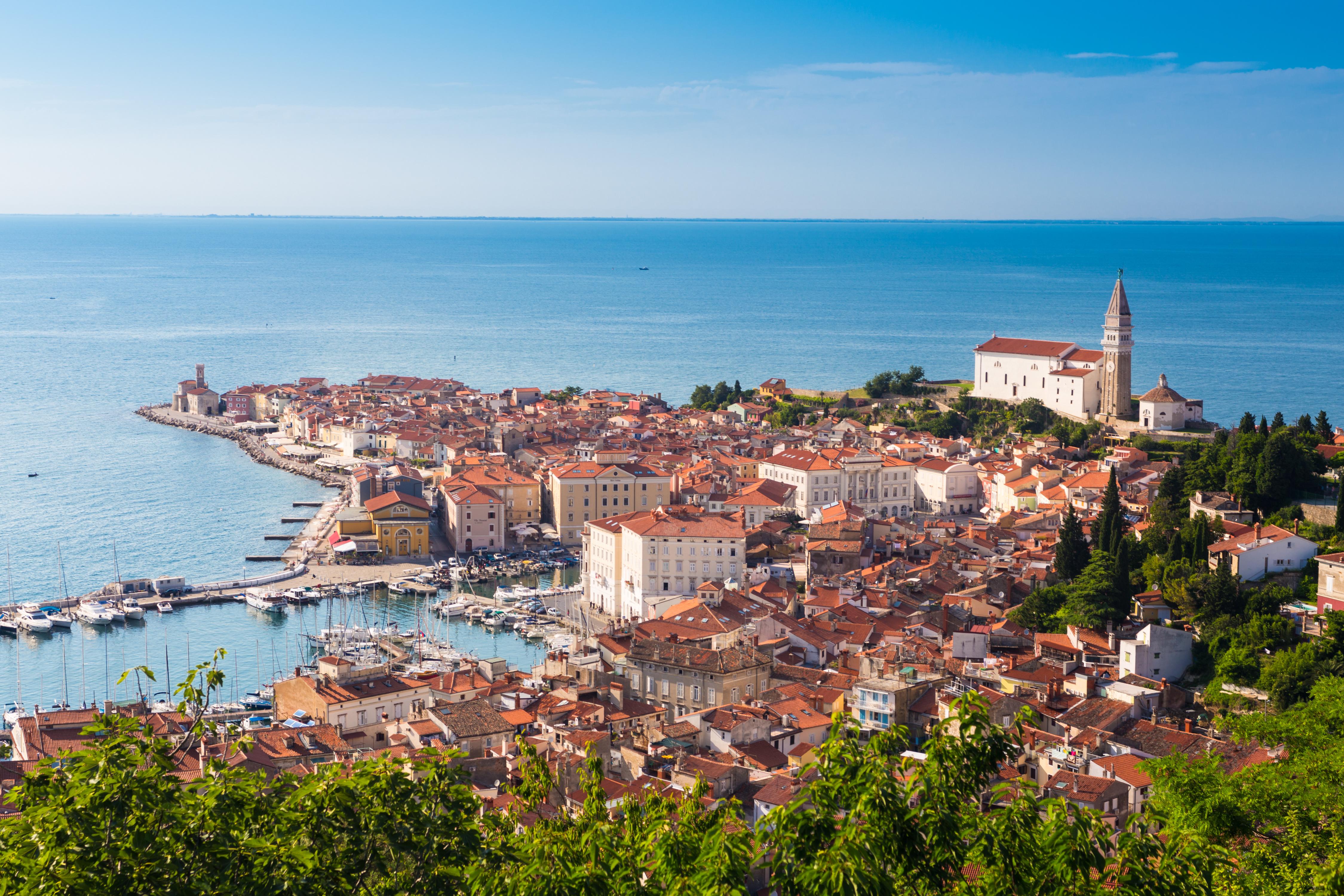
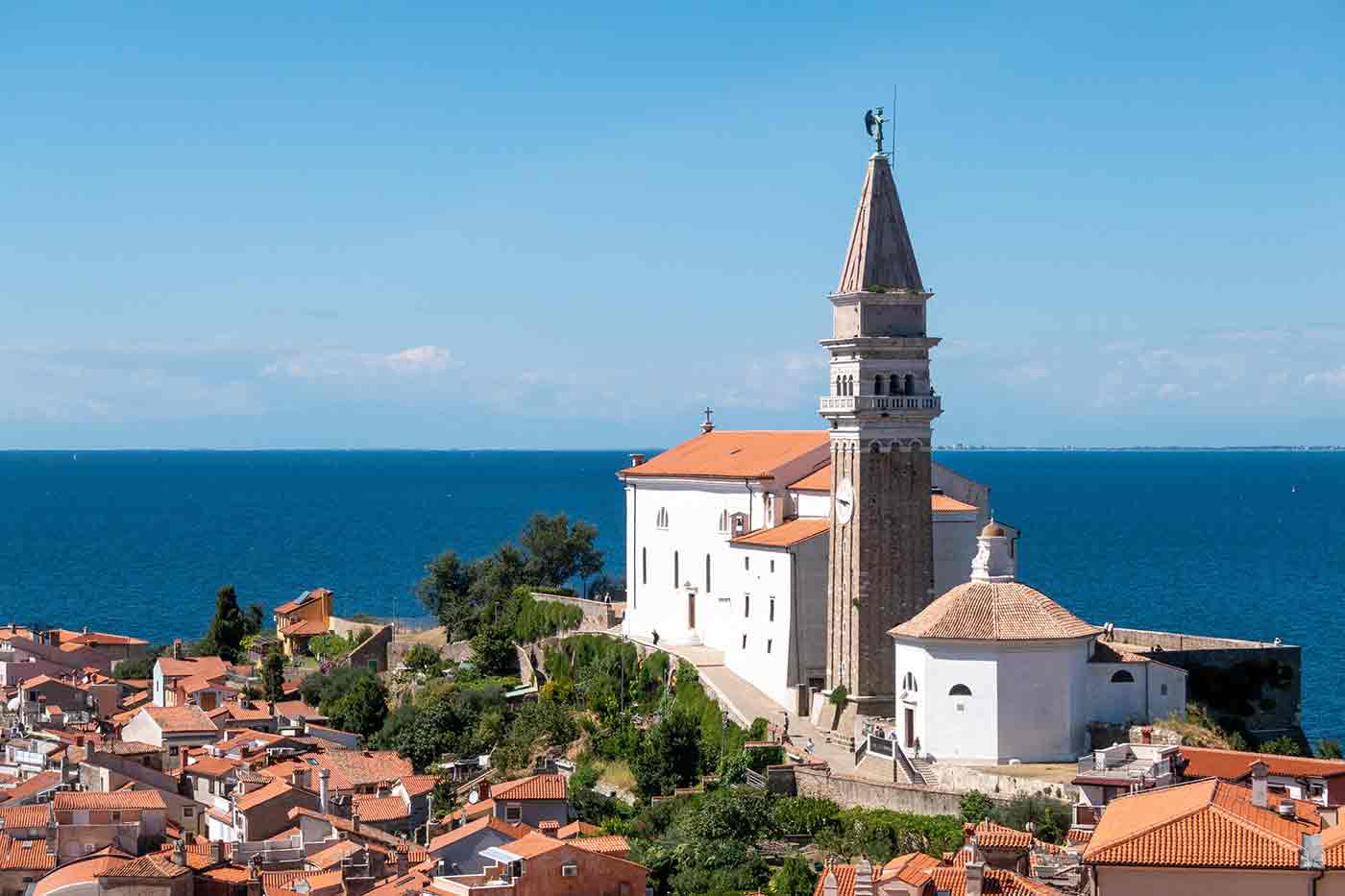
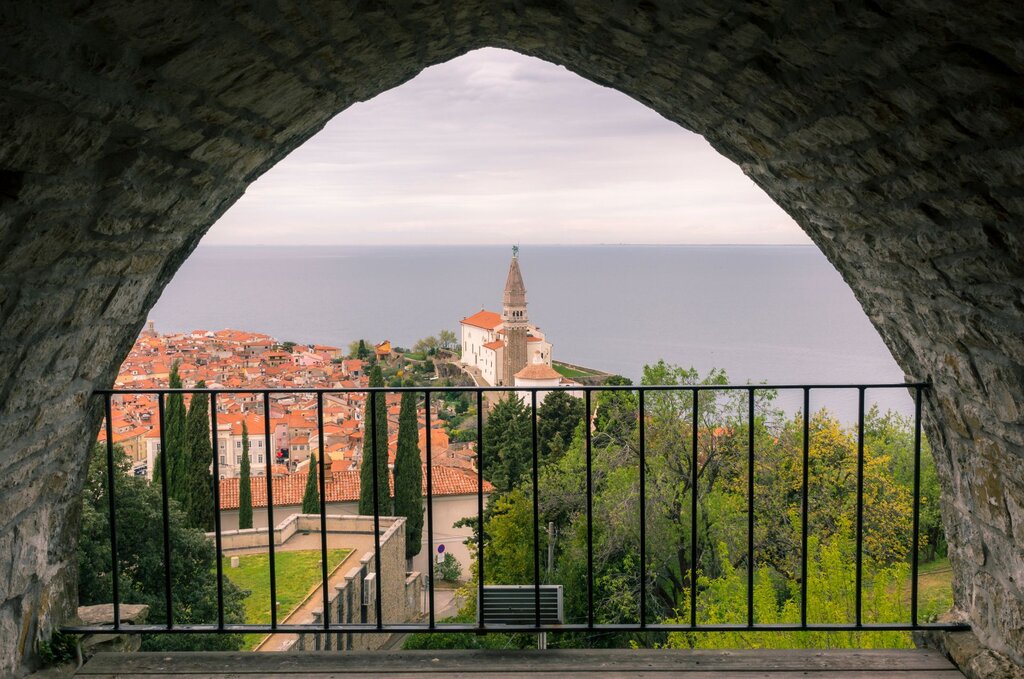
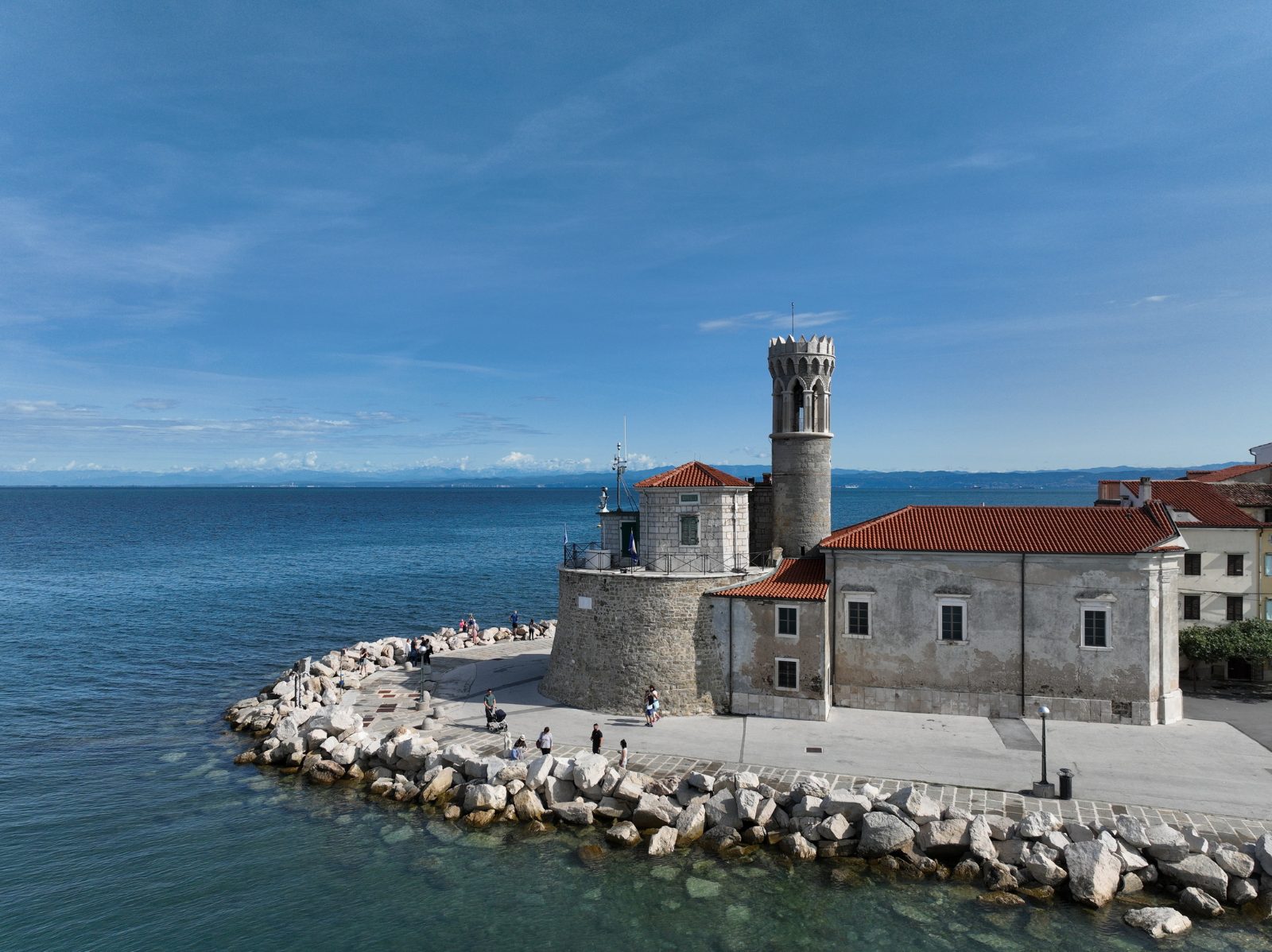
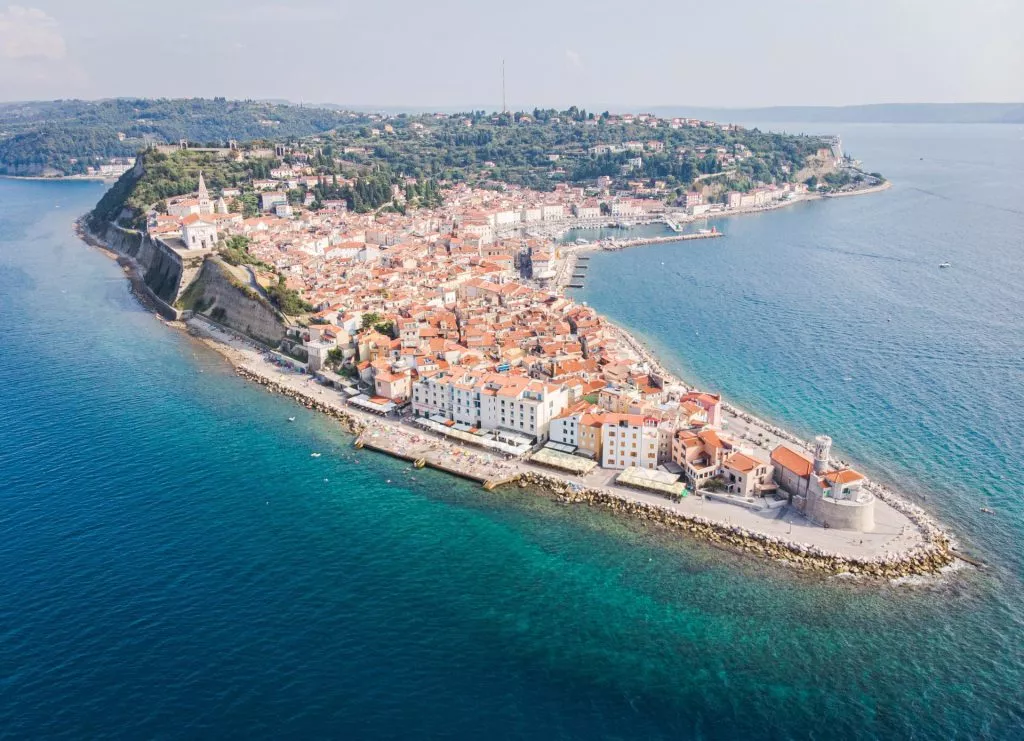
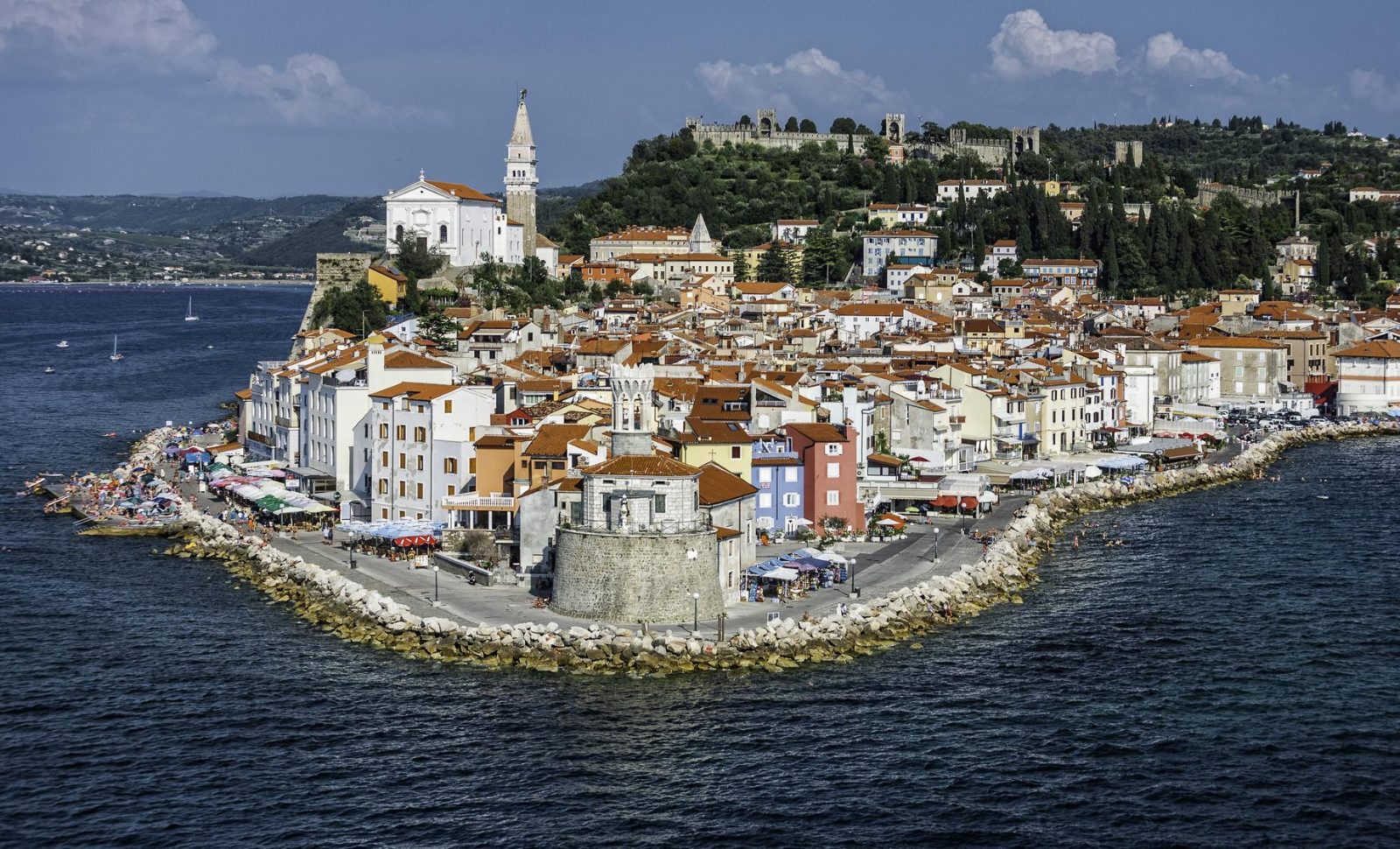
You walk the ramparts next, following the medieval wall uphill to the Church of Saint George, its white facade catching the offshore wind. The view frames the peninsula as a single composition: terracotta roofs descending in tiers, narrow alleys branching like capillaries, the lighthouse at Punta marking the farthest point. You descend to the harbor and follow the seafront promenade, passing gelato kiosks and small taverns where grilled squid smoke drifts over the quay. At the Punta tip, waves break against the rocks below the lighthouse; a few swimmers climb from the water onto the concrete pier.
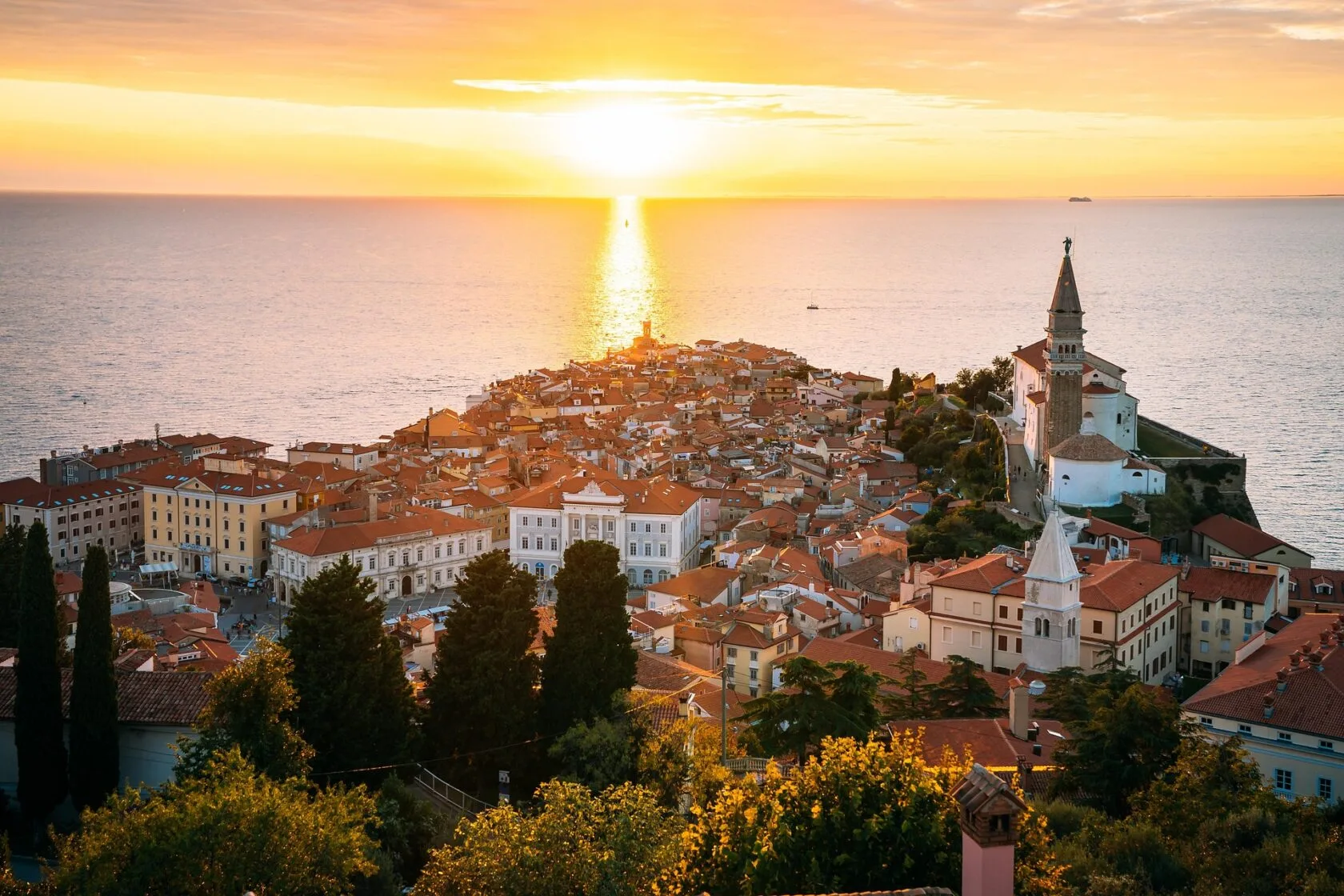
If your tour includes the salt pans, you cross the border into the Sečovlje reserve, walking wooden planks between shallow basins where salt crystals form white mosaics. Workers rake the harvest into pyramids; the air tastes mineral and sharp. You return to Tartini Square for the final half-hour, enough time to order an espresso under the loggia and watch the afternoon light angle across the campanile's shadow.
All the details about your upcoming adventure in one place
Piran's Venetian core survived seven centuries without a single street widening.
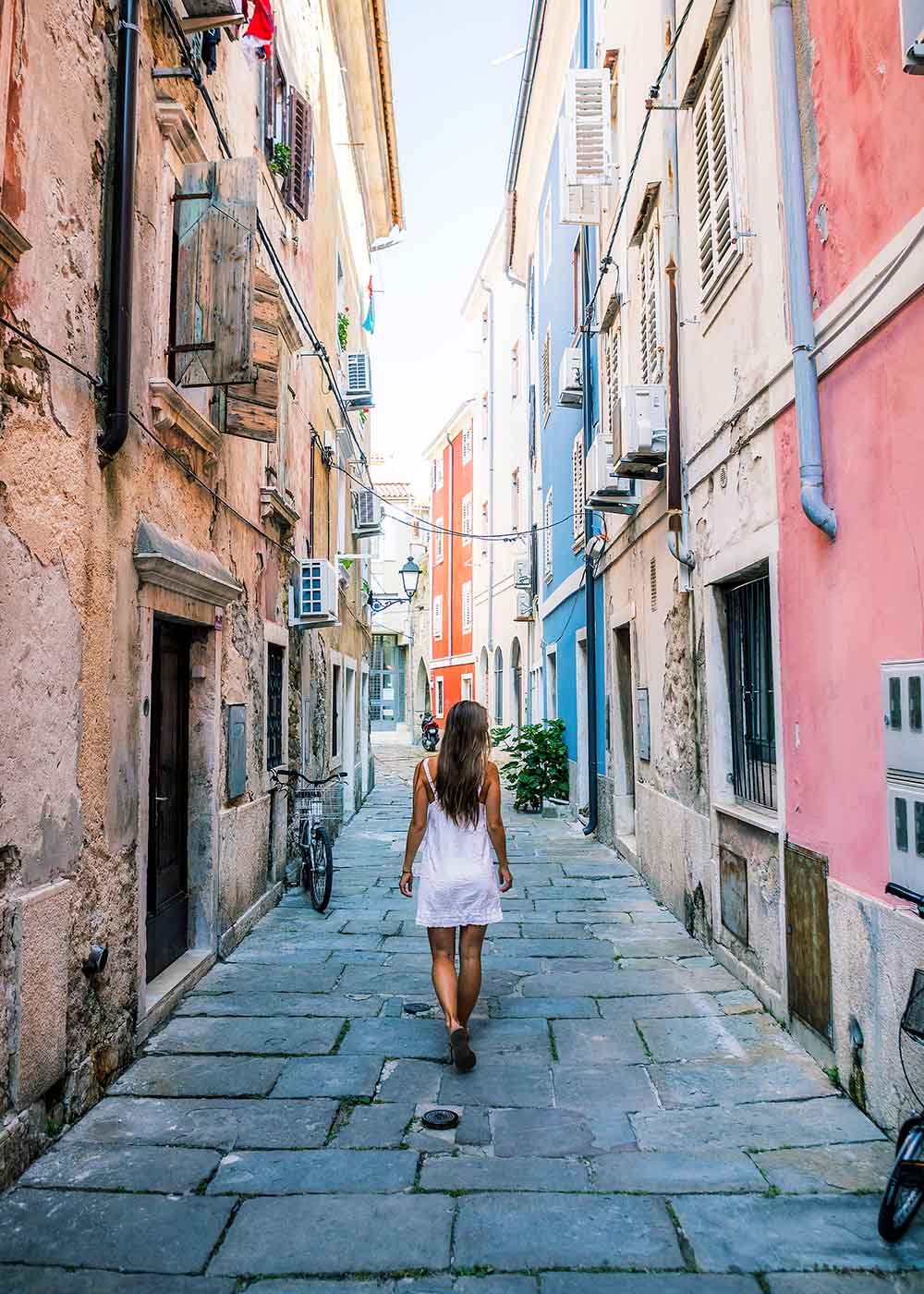
The Republic of Venice governed this harbor from 1283 to 1797, and the resulting townscape — terracotta rooftops pressed against stone quays, Gothic windows above arcaded ground floors, a campanile modeled on San Marco's — remains Slovenia's most complete Adriatic settlement. The peninsula measures just 450 meters tip to base, yet its labyrinth of stepped alleys, vaulted passageways, and sudden piazzas holds 4,000 permanent residents and absorbs summer crowds without losing its working-port character. Fishermen mend nets on the Punta jetty at dawn; the market on Kidričevo nabrežje sells Istrian truffles and olive oil from groves visible across the bay.
The town radiates from Tartini Square, named for violinist and composer Giuseppe Tartini, born here in 1692. His statue anchors the oval piazza, which was the inner harbor until 1894, when the Venetian basin was filled and paved with Carrara marble inlays. The square's perimeter preserves the Benečanka house — a 15th-century Gothic residence with a red facade and triple-arched balcony — and the Baroque town hall, its clock tower visible from every approach. Three city gates pierce the medieval walls: the land gate facing the salt pans, the sea gate opening to the marina, and the Delfin gate leading to the lighthouse point. Each gate carried customs duties during Venetian rule; the stone lion of Saint Mark still marks the thresholds.
Piran day tour from Ljubljana tours typically pair the town with Postojna Cave or Škocjan Caves, creating a 10-hour loop through karst and coast. The drive from Ljubljana follows the A1 motorway southwest for 120 kilometers, descending from the Dinaric plateau to sea level at Koper before the final 15-kilometer coastal road to Piran. Most itineraries allocate two to three hours for the peninsula, enough to walk the ramparts, climb the campanile, and follow the seafront promenade to the tip of Punta, where the lighthouse has guided ships since 1872. The town opens daily; individual monuments charge separate entry. Morning arrivals secure parking along the harbor; by midday, visitors park in the hilltop garage and walk down.
The salt pans at Sečovlje, five kilometers south, supplied Venice's Adriatic fleet and remain a working landscape museum. Wooden sluices channel seawater into shallow basins; in summer, crystalline salt forms geometric crusts harvested by hand. The Forma Viva sculpture park, on the point beyond the marina, displays 130 stone works carved in situ since 1961, turning the rocky shoreline into an open-air gallery. Piran day tour from Ljubljana experiences often include a coastal walk to these sites, extending the peninsula's visual narrative from medieval core to modernist intervention.

The peninsula measures just 450 meters tip to base, yet its labyrinth absorbs summer crowds without losing its working-port character.
Comfortable footwear is recommended for the stone-paved streets and hilly climbs. Respectful attire is expected when entering churches.
No dedicated security checkpoints exist for town entry. Drivers may use a 15-minute window for luggage drop-off at the old town gates.
Photography is permitted throughout the public areas. Sunset from the city walls is a highly sought-after capture.
Children enjoy the open spaces of Tartini Square and the coastal paths. Strollers may be challenging on uneven historic cobbles.
The town features narrow, steep streets and stairs, making it difficult for wheelchair users. Visitors with reduced mobility should plan routes carefully.
Numerous local konobas and cafes serve Istrian cuisine. Bring water during summer months when climbing to the city walls.
Opening Hours
00:00–23:59
Address
Piran, 6330, Slovenia
Accessibility
Town centre is pedestrian-only with steep, narrow streets.
Arrival
08:00–10:00
Luggage
Drop-off allowed for 15 minutes at town entrance.
Navigation
Walking is the primary way to explore.
Entry to the town of Piran is 0 EUR. Individual attractions like the town walls or bell tower operate their own ticket policies.
Recommended time
4-6 hours
To fully enjoy a piran day tour from.ljubljana, dedicating at least half a day allows you to wander the Venetian Gothic architecture and medieval alleyways at a relaxed pace. Following the best arrival window of 08:00–10:00 ensures a smoother experience before peak excursion traffic arrives at the Tartini Square. Those seeking a piran day tour from.ljubljana tours experience often add time for coastal relaxation, while those focusing on piran day tour from.ljubljana tickets for specific local museums may need shorter intervals.
Crowd levels through the day
Piran's strategic peninsula was first settled by the Illyrians and later fortified by the Romans, who established salt pans along the shallow coastal flats. The town's medieval character took shape under Venetian rule beginning in 1283, when the Republic of Venice absorbed the settlement into its Adriatic empire. Venetian merchants transformed Piran into a fortified salt-trading hub, constructing the town walls, defensive towers, and the compact maze of narrow streets that still define the historic core. The Cathedral of St. George, perched on the hill overlooking Tartini Square, was consecrated in 1344 and remains the town's architectural anchor. Salt production dominated Piran's economy for six centuries. The Sečovlje and Strunjan salt pans, managed by skilled salt workers who passed techniques across generations, supplied markets throughout the Venetian territories. Gothic and Renaissance palaces rose along the waterfront as salt merchants accumulated wealth. The fall of Venice in 1797 transferred Piran to Austrian control, and salt production continued under Habsburg administration until the late 19th century, when industrial competition eroded profitability. Many pans were abandoned, though sections near Sečovlje have been preserved as a working heritage site. The 20th century brought repeated border shifts. Piran became part of Italy after World War I, then Yugoslavia after World War II, and finally Slovenia in 1991. Urban renewal efforts began in the 1980s, when the Slovenian government classified the medieval quarter as a protected monument zone. Stone facades were restored, traffic was restricted, and the compact Venetian grid was preserved. Today, piran day tour from.ljubljana itineraries center on this layered architectural record, where Roman foundations, Venetian Gothic windows, and Austrian-era neoclassical details coexist within blocks unchanged since the 15th century.
Roman settlement established on the peninsula with fortified salt works
Venice annexes Piran, begins construction of defensive walls and town fortifications
Cathedral of St. George consecrated on the hill above the harbor
Salt trade expands; Venetian Gothic and Renaissance palaces built along waterfront
Napoleon dissolves Venice; Piran transferred to Austrian Habsburg control
Industrial competition reduces salt profitability; many pans near town abandoned
Piran assigned to Yugoslavia under Free Territory of Trieste partition
Slovenian authorities declare medieval core a protected heritage zone
Stand in the center of the main oval plaza to capture the Venetian architecture and the statue of Giuseppe Tartini against the backdrop of narrow streets. This remains a central highlight for those on a piran day tour from.ljubljana.
Climb the wooden steps to the top of the campanile for a panoramic view of the red-tiled roofs and the Adriatic Sea. It provides a classic perspective of the town peninsula.
Position yourself along the northern ramparts to photograph the entire town extending into the blue water. These fortifications offer the most distinct skyline angle for a Piran day tour from.ljubljana tour.
Walk to the very tip of the peninsula to capture the lighthouse where the Adriatic waves hit the stone pier. This spot is perfect for framing the church tower from sea level during a piran day tour from.ljubljana tours.
Planning a piran day tour from.ljubljana provides families with a compact coastal experience perfect for young children. This historic seaside town on the Slovenian Coast is highly walkable and full of engaging maritime charm.
The narrow, winding cobblestone streets make a compact stroller or baby carrier the best choice for your piran day tour from.ljubljana tours. Be prepared for occasional uneven surfaces while navigating toward the lighthouse or central square.
Toddlers and school-aged children enjoy the shallow water access and open spaces, though keep a close watch near the seawalls. This destination is well-suited for a piran day tour from.ljubljana tour due to its manageable size and lack of overwhelming scale.
Public restrooms are available within the town, though changing facilities can be limited, so carry necessary supplies in your day bag. You may want to secure your piran day tour from.ljubljana tickets for specific local museums in advance to ensure smooth entry.
The best arrival window is 08:00–10:00, which allows families to explore the Venetian architecture and Mediterranean harbor before the afternoon heat and crowds increase. Taking frequent breaks for gelato near the water helps maintain a relaxed tempo for the little ones.
While the town is generally safe, the Adriatic coastline has rocky entry points rather than typical sand beaches. Always supervise children closely near the Venetian-style docks and stone piers that characterize this Adriatic landmark.
Dining options during a piran day tour from.ljubljana range from bustling waterfront terraces serving fresh Adriatic seafood to quiet, authentic konobas tucked away in the narrow cobblestone alleys. While the harbor front provides the most iconic seaside atmosphere, exploring the old town interiors often leads to better value and calmer Mediterranean culinary experiences for those on piran day tour from.ljubljana tours.
Located in a hidden courtyard, this spot specializes in fried seafood served in paper cones, making it a perfect quick stop during your piran day tour from.ljubljana tour.
Everything you need to know for your journey
Yes, entrance fee is 0 EUR. Individual attractions may charge their own fees.
The best arrival window is 08:00–10:00 to avoid crowds and parking issues.
The town is a public space accessible 00:00–23:59 every day.
Most visitors choose car, bus, or private transfer for their piran day tour from.ljubljana.
No, you must park at Arze or Fornače garages and walk into Piran.
Piran is a public town, so you do not need piran day tour from.ljubljana tickets to enter.
Don't miss the City Walls, Tartini Square, and the Church of St. George.
Yes, though the narrow, hilly streets require sturdy footwear for all ages.
Bring comfortable shoes, water, and sun protection for your piran day tour from.ljubljana.
Yes, buses run from Ljubljana, though travel time is typically 2–2.5 hours.
Join thousands of happy travelers who have discovered this incredible experience
Book Your Experience Now